What tools are available for comprehensive website visitor analysis?
Seeing what people really do on your website
Why guessing about visitor behavior quietly costs small businesses sales
If you run a small business, you already know people are visiting your site. What you probably don't know is what they do once they land. Website visitor analysis tools fill that gap: they show you where visitors come from, which pages they read, where they get stuck and why they leave. Below we walk you through the main types, name the tools worth knowing, and show you how we bring them together in one place.
What are the best tools to monitor website visitor behavior?
Quick answer
The best tools fall into four groups: traffic, behavior, search, and all-in-one. For a small team that doesn't want to stitch five logins together, an all-in-one covers all four in one place.
Every tool answers a slightly different question about your visitors. The trick is knowing which question you're actually asking. Let's take them one group at a time.
1. Traffic and audience tools: who shows up, and from where
These tell you how many people visit, which channels they arrive through, what devices they use and which pages get attention. There is no shortage of options here, from the big names to lighter privacy-first ones, and roughly 7 in 10 small businesses already run something. They all answer the same question, though: how much traffic, and from where. Useful, but only half the story, and the bigger ones get complicated fast for a small team.
What traffic tools do not tell you is the why. You'll see that a page has a high exit rate, but not what made someone give up on it. For that, you need the next group.
2. Behavior tools: what visitors actually do on the page
This is where visitor analysis gets genuinely useful. Heatmaps show where people click, move and scroll, so you can see the button nobody notices or the section everyone ignores. Session recordings replay real visits, anonymised, so you can watch someone hesitate at your form and finally understand why they didn't finish it. Separate tools exist that do one or the other. We build both straight into Tryneth, next to your traffic and search, so it is one screen instead of another login and another bill.
For a small business, this is often the fastest path to more sales, because you stop guessing at your visitor behavior and start watching it. One fixed form or one clearer call to action can move your numbers more than a month of extra traffic.
3. Search visibility tools: how people find you in the first place
Before anyone becomes a visitor, they search. Knowing which queries you appear for, where you rank and which listings get clicks is often the cheapest way to grow visits, because nudging a page from the edge of page one pays off quickly. Tryneth's Keywords view pulls this in next to everything else, so search sits in the same picture as behavior.
4. The all-in-one option, made for small teams
Here's the catch with everything above: it's four separate tools, four logins and four half-pictures that never quite line up. Most small business owners don't have time to reconcile them. That's exactly why we built Tryneth as one platform: traffic, heatmaps, session recordings, search performance and even AI visibility in a single view, so the whole story of a visitor sits on one screen. You get the depth of the specialist tools without becoming a full-time analyst.
Why we care about this so much
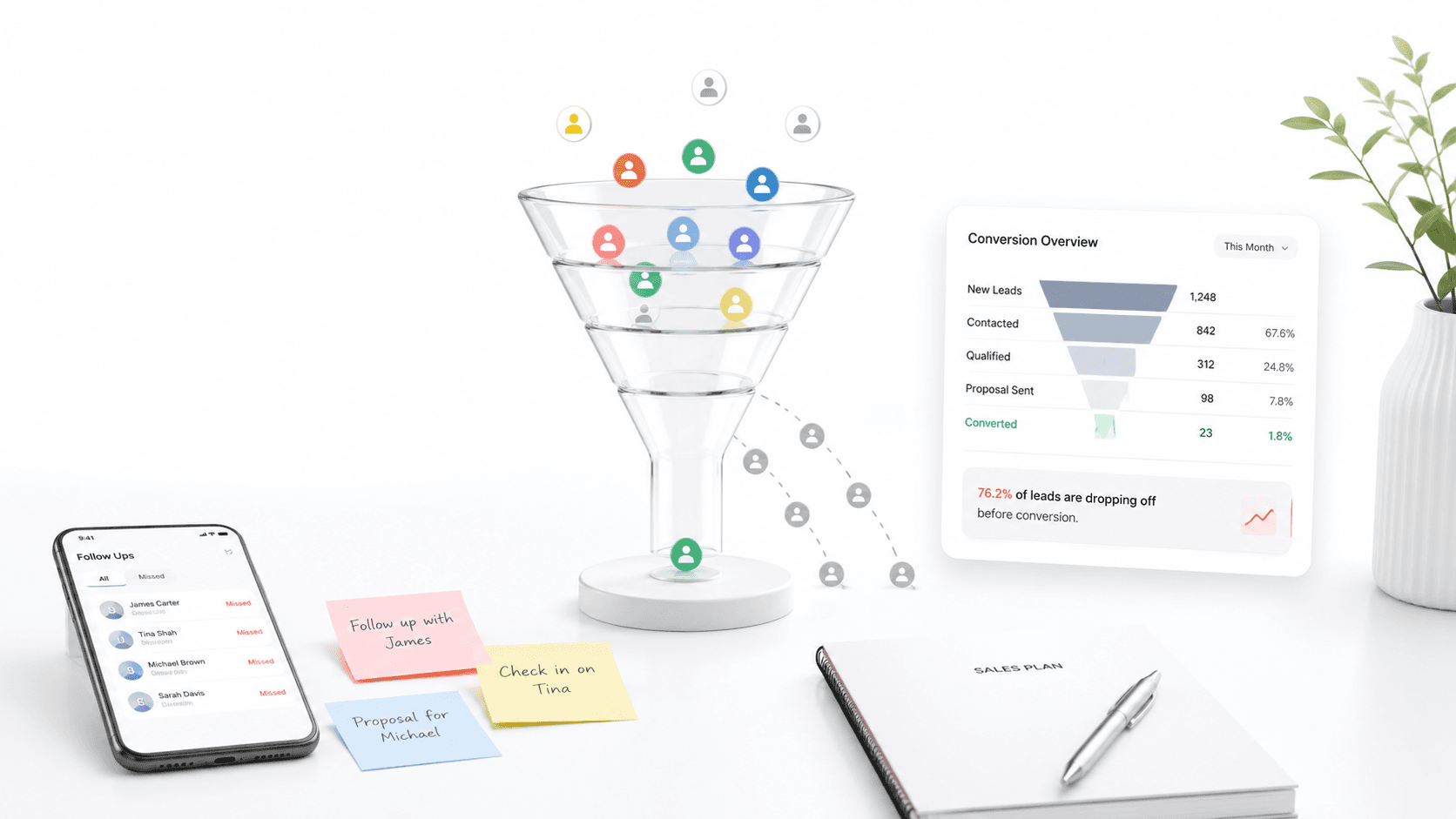
We see it constantly. A small business pours budget into ads and new pages, watches the visitor count tick up, and still doesn't grow. Not because the traffic is bad, but because nobody can see what happens after the click. It's a little heartbreaking, honestly, to watch someone work that hard while flying blind. Good visitor analysis turns "we think people like this page" into "we know they drop off at the third field", and that one shift is where real improvement starts.
What do the numbers say?
A few figures put this in perspective. Most small businesses already collect visitor data, yet far fewer have set it up to actually answer questions, and with most traffic now on mobile, a page that stumbles on a phone loses people fast.
Straight talk before you pick a tool
What it costs. Tryneth has a 3-day free trial with no card, so you can see it on your own site before you pay anything. When you do sign up, it is one clear monthly figure, not five separate subscriptions and a stack of logins to reconcile.
Start small, in one place. You don't have to use every feature on day one. Begin with the one question that is bugging you, where people drop off, or which page they ignore, and grow from there. Because it all lives in one platform, you are not rebuilding your setup later or bolting new tools on top.
Where people go wrong. They install a tool and never look at it. Data you don't read is just storage. The tool matters far less than the habit of checking it and changing one thing at a time.
The businesses that grow online are rarely the ones with the most traffic. They're the ones who actually watch what their visitors do, and fix the small things everyone else ignores.
Want the full picture in one place instead of five tabs? See how Tryneth tracks where visitors drop off, or explore live session recordings and heatmaps.
Frequently asked questions about website visitor analysis tools
What tools are available for comprehensive website visitor analysis?
They fall into four groups: traffic and audience analytics, behavior tools with heatmaps and session recordings, search visibility, and all-in-one platforms that combine all of these in one dashboard. There are plenty of separate tools for each group. Tryneth is the all-in-one that brings traffic, behavior, search and AI visibility together, so a small team doesn't have to run and pay for four of them.
What are the best tools to monitor website visitor behavior for small businesses?
There are dedicated behavior tools that give you heatmaps and recordings, and they do that single job well. For a small team, though, the better fit is usually an all-in-one like Tryneth, because you get heatmaps and session recordings alongside your traffic and search in one place, instead of paying for and logging into several tools that never quite line up.
Do I really need paid tools, or are the free ones enough?
Free tools can cover the basics, but they cover them in fragments: one for traffic, another for heatmaps, another for search, and it is on you to stitch them together and keep checking each one. The cost you don't see is your time. Tryneth puts it in a single view, and the 3-day free trial lets you compare it against whatever you use now before you decide.
What is the difference between traffic analytics and behavior analytics?
Traffic analytics tells you how many people visit and where they come from. Behavior analytics, through heatmaps and recordings, shows what they actually do once they arrive. You need both: one tells you the size of the problem, the other tells you the cause.
Is visitor tracking allowed under privacy rules like the GDPR?
Yes, when done correctly. That usually means anonymising data, respecting consent and avoiding tools that over-collect. Privacy-first options exist, and recordings should mask personal input. We build visitor analysis to stay on the right side of these rules by default.
See what your visitors are really doing
Stop guessing. Start a free 3-day trial and see your traffic, heatmaps and recordings in one view, then act on the quick wins hiding in your own data.
Start your free 3-day trialAt Tryneth we help small businesses turn website visitors into customers. Curious how it works? Explore the tools that do the watching, Live View, Heatmaps and Client Flows, check our pricing to see what fits, or read a little about our team. When you're ready, start your free 3-day trial and see it on your own site.